
How Amber Glass Provides UV Protection for Light-Sensitive Oils
The Science Behind Amber Glass and Its Wavelength Filtering Properties
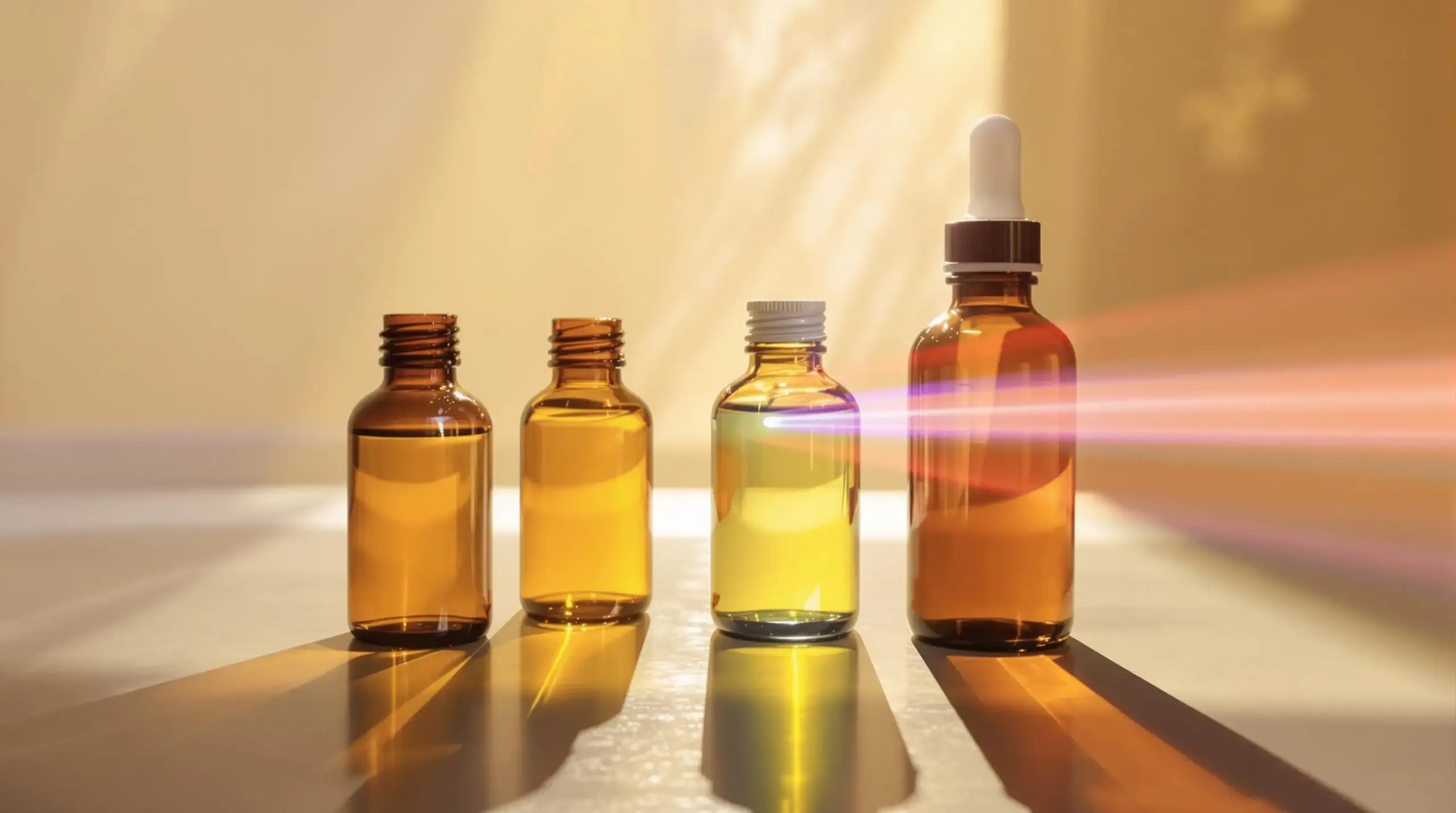
Amber glass actually stops about 90 to 95 percent of those harmful UV rays because it contains iron oxide and some sulfur compounds. These materials work together to soak up dangerous wavelengths that fall within the 300 to 500 nm range. And guess what? That’s exactly the spectrum that causes the most damage to light sensitive oils. The protection offered by amber glass really matters when we talk about something called photodegradation. Basically, this happens when UV light starts breaking down important stuff like terpenes found in essential oils. Over time, this means the oils lose their effectiveness and just don’t work as well anymore according to research published in the Journal of Pharmaceutical Sciences back in 2022.
Clear Glass vs. Amber Glass: Preserving Freshness, Potency, and Shelf Life
Oils stored in clear glass degrade three times faster than those in amber glass under ambient light. Citrus-based oils, for example, lose 40% of their limonene content in clear containers after 60 days, compared to less than 10% in amber glass.
| Glass Type | UV Blocking % | Oxidation Rate Reduction | Shelf Life Extension |
|---|---|---|---|
| Clear Glass | 0% | Baseline | 0—3 months |
| Green Glass | 30—50% | 25—40% | 6—9 months |
| Amber Glass | 90—97% | 72—85% | 18—24 months |
Is Amber Glass Enough? Evaluating Supplemental UV Protection Needs
While amber glass offers optimal protection for typical retail and home environments, additional safeguards are recommended for extreme conditions such as equatorial shipping or prolonged display under bright lighting. Consider using secondary opaque sleeves, UV-filtered storage cabinets, or aluminum overwraps for pharmaceutical-grade products.
Role of Non-Reactive and Impermeable Materials in Preventing Oxidation
Amber glass forms an impermeable barrier with an oxygen transmission rate of just 0.0015 cc/m²/day—significantly lower than the 0.5 cc/m²/day seen in plastic containers. This near-zero permeability helps prevent oxidative rancidity in lipid-rich oils such as rosehip seed and marula, preserving their chemical integrity over time.
Extending Potency and Shelf Life of Essential Oils in Amber Dropper Bottles
How Amber Glass Maintains the Chemical Stability of Essential Oils Over Time
Amber glass filters out light wavelengths between 470 and 500 nm that are particularly harmful to terpenes and esters, cutting down on photodegradation by about 83% when compared to regular clear glass according to research published in the Journal of Essential Oil Research back in 2023. The material itself is made from non reactive silica which stops ions from leaking into contents inside, something that might otherwise speed up oxidation processes. Tests conducted over twelve month periods show that this kind of packaging maintains around 98 percent of product strength as reported by the Natural Product Preservation Alliance study from 2022.
Case Study: Lavender Essential Oil Preservation in Amber Dropper Bottles
In 2022 researchers looked at how lavender oil holds up when stored as it would be in stores, and they found something interesting. The samples kept in those dark amber dropper bottles still had about 94% of their linalool acetate after 18 whole months, which is one of the main compounds responsible for its therapeutic effects. Meanwhile, the ones in clear glass only held onto around 67%. When it comes to oxidation, the numbers tell an even clearer story. Amber containers showed much better results with peroxide values measuring just 15 mEq/kg, whereas the unprotected bottles hit 110 mEq/kg. These findings from the AromaChemistry Journal back up what many essential oil enthusiasts already suspect about proper storage making all the difference in quality preservation.
Best Practices for Long-Term Storage of Light-Sensitive Formulations
- Fill bottles to 85—90% capacity to minimize oxygen headspace
- Store upright at 15—20°C (59—68°F), avoiding temperature fluctuations that accelerate degradation
- Use tamper-evident dropper inserts with hermetic seals to reduce volatile organic compound (VOC) evaporation from 12% to 2% annually
- Pair amber glass with secondary barriers like UV-coated cartons for formulations targeting shelf lives beyond 24 months